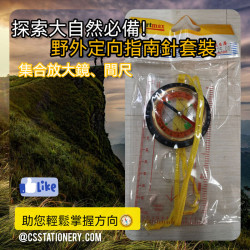

Compass and Environmental Protection
The compass is a tool for navigation and positioning, and it is one of the indispensable tools in activities such as sailing, field adventures, hiking, etc. Although the guidelines are of great help to human life and work, they may also have an impact on the environment during use and disposal. This article explores the guide's impact on the environment and provides some suggestions for using and handling the compass to help readers reduce their environmental impact.
1. The guidelines address environmental impacts
Compasses usually use magnetic substances to indicate direction, including metals such as steel and iron. During the use and handling of the compass, these metals can cause pollution and damage to the environment.
First of all, the manufacture of the compass requires the consumption of resources and energy, such as metals such as steel, copper, zinc, nickel, and energy such as coal and oil. The extraction, processing and transportation of these resources and energy have environmental impacts, including land destruction, water pollution, air pollution, etc.
Secondly, when using and handling the compass, if attention is not paid to protecting the environment, the metal in the compass may be released into the environment, causing environmental pollution and ecological damage. For example, if a discarded compass is discarded haphazardly in the field or in water, the metals in it may leach into the soil or water, affecting the ecosystem. In addition, the battery in the compass can also cause pollution to the environment, and harmful substances may leak if not handled correctly.
2. How to reduce the impact of the guidelines on the environment
Although the guidelines have an impact on the environment, we can reduce its impact by:
(1) Use an eco-friendly compass. There are now eco-friendly compasses that are made from renewable materials that reduce their environmental impact. When buying a compass, you can choose these eco-friendly compasses.
(2) Keep the compass carefully. The compass is a valuable tool that should be carefully kept. In the process of using the compass, care should be taken to avoid collision and damage to extend its service life. At the same time, do not discard the discarded compass at will, you can give it to a special recycling agency for disposal.
(3) Dispose of the battery in the compass correctly. The battery in the compass is a harmful substance that can cause pollution to the environment if not handled correctly. When replacing batteries, environmentally friendly batteries should be selected, and discarded batteries should be recycled correctly to avoid random disposal.
(4) Promote the use of digital navigation tools. With the development of technology, digital navigation tools are also becoming more and more popular, such as smartphones, GPS, etc. These digital navigation tools are not only easy to use, but also have a relatively low environmental impact.
3. Conclusion
The compass is an important navigation tool, and it has a wide range of applications in many fields. However, in the process of using and handling the compass, we should also take care to reduce its environmental impact. By using eco-friendly compasses, careful care of compasses, proper disposal of batteries in compasses, and promotion of the use of digital navigation tools, we can reduce the environmental impact of guides and protect our ecosystems. At the same time, we should also raise environmental awareness, actively participate in environmental protection actions, and make our own contributions to building a beautiful home for the earth.