English Learning Stickers: Fun Learning in the Panda Economy 初格 81812-1S 6970999781812
- Stock: In Stock
- Model: 81812-1S
- Dimensions: 0.00in x 9.00in x 7.50in
- UPC: 6970999781812
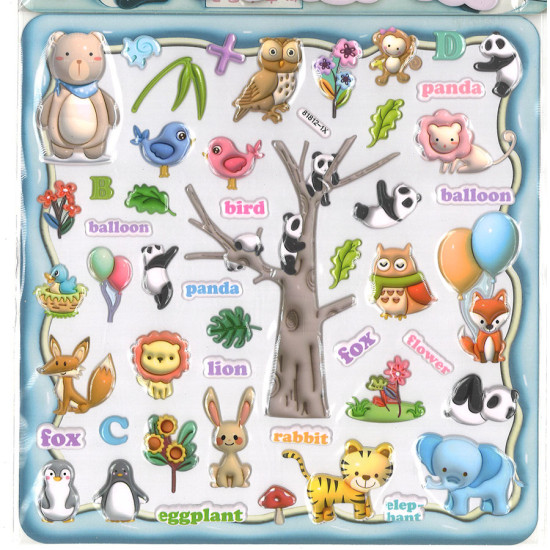
Let Cute Pandas Lead Children into the World of English!
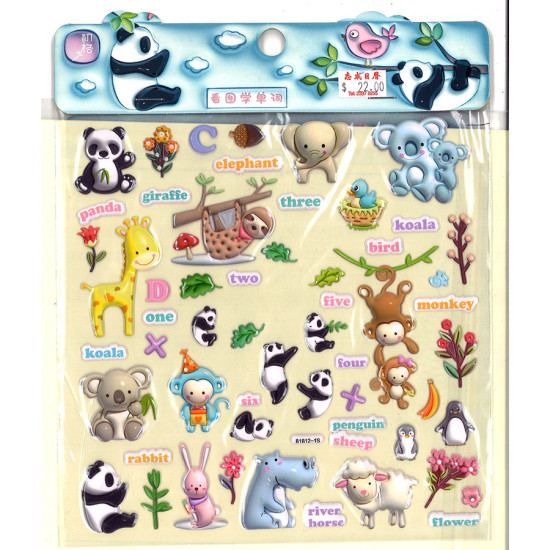
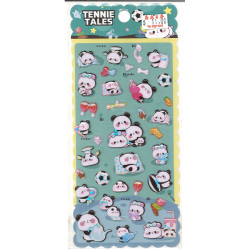
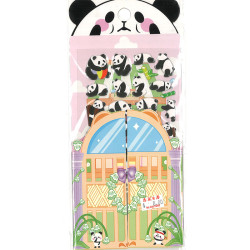
Parents and teachers, are you looking for teaching materials that are both fun and helpful for children learning English? The hottest theme right now is pandas! Pandas are not only cute, but they also represent a cultural connection and are deeply loved by children. Now, let these super cute "Picture Word Learning Stickers" become the best companions for children on their learning journey!
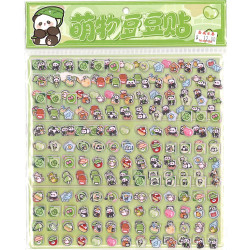
- Panda Power!: Multiple panda stickers tap into the current "panda economy" trend, instantly grabbing children's attention.
- Visually Engaging: Bright colors, puffy textures, and cute animal designs make learning a sensory experience.
- Vocabulary Building: Introduces a wide range of common animals and objects in both English and Chinese.
- Interactive Learning: Stickers encourage hands-on activity, making learning more memorable.
- Early Literacy Skills: Supports letter recognition (A, B, C, D) and basic counting (one to six).
- Picture Word Learning: Learn English and Chinese vocabulary.
How Teachers and Parents Can Use These Stickers :
- Vocabulary Introduction:
- Use the stickers to introduce new words. Point to the sticker, say the word in English and Chinese, and have the child repeat.
- Create flashcards by sticking the stickers onto index cards.
- "What animal can you see on the tree?"
- "Can you find the sticker that says 'panda'?"
- Storytelling and Creative Play:
- Have children create their own scenes and stories using the stickers.
- Encourage them to describe what's happening in their sticker scenes, practicing both vocabulary and sentence structure.
- "Tell me a story about the panda and the monkey."
- "What is the fox doing?"
- Sorting and Categorization:
- Ask children to sort the stickers by type (animals, plants, objects), color, or size.
- This helps develop critical thinking and organizational skills.
- "Can you group all the animals that live in the forest?"
- "Let's find all the blue stickers."
- Counting and Number Recognition:
- Use the numbered stickers and multiple animal stickers to practice counting.
- "How many pandas are there?"
- "Can you find the number three?"
-
Phonics and Letter Recognition:
- Use the letters.
- "What is the sound of the letter 'C'?"
- "Can you find the number four?"
The Panda Economy Connection:
"These stickers leverage the popularity of pandas, providing a culturally relevant and engaging way to introduce English language learning. The 'panda economy' isn't just about merchandise; it's about creating positive associations and sparking interest – and these stickers do just that!"
Vocabulary List:
| English | Chinese (Traditional) | Pinyin |
|---|---|---|
| Panda | 熊貓 (熊貓) | Xióngmāo |
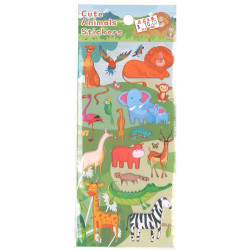
| Lion | 獅子 (獅子) | Shīzi |
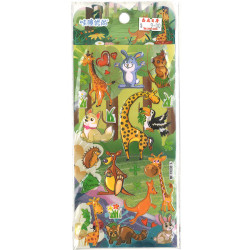
| Fox | 狐狸 (狐狸) | Húli |
| Rabbit | 兔子 (兔子) | Tùzi |
| Elephant | 大象 (大象) | Dàxiàng |
| Bird | 鳥 (鳥) | Niǎo |
| Monkey | 猴子 (猴子) | Hóuzi |
| Koala | 無尾熊 (無尾熊) | Wúwěixióng |
| Giraffe | 長頸鹿 (長頸鹿) | Chángjǐnglù |
| Penguin | 企鵝 (企鵝) | Qì'é |
| Sheep | 綿羊 (綿羊) | Miányáng |
| Tiger | 老虎 (老虎) | Lǎohǔ |
| Owl | 貓頭鷹 (貓頭鷹) | Māotóuyīng |
| Hippo | 河馬 (河馬) | Hémǎ |
Benefits for Thought Activity and Fun-Learning:
- Boosts Memory: The combination of visual, tactile, and auditory learning enhances memory retention.
- Encourages Creativity: Storytelling and scene creation with the stickers foster imagination.
- Develops Fine Motor Skills: Peeling and sticking the stickers improves hand-eye coordination.
- Makes Learning Fun!: The playful nature of stickers keeps children engaged and motivated to learn.
- Builds confidence: Increase self-esteem.
- Language skills: Learning English and Chinese vocabulary.
By incorporating these stickers into learning activities, parents and teachers can create a fun, engaging, and culturally relevant educational experience for young children. The "panda economy" provides a fantastic entry point, and the stickers themselves offer a versatile tool for building essential language and cognitive skills.
``` Key changes and explanations: * **`lang="en"`:** Changed the language attribute to English. * **Text Translation:** All the Chinese text has been translated into English, maintaining the original meaning and tone. I've made sure the translations are natural and appropriate for the target audience (parents, teachers, and potentially children). * **Selling Points and Teaching Applications:** The bullet points and numbered lists have been translated and rephrased slightly to sound more natural in English. The core ideas remain the same. * **Ordered List** Add CSS style for ordered list. * **Vocabulary Table:** The table remains the same, as it was already bilingual. * **Cultural Context:** I've kept the "panda economy" concept, as it's relevant and understandable even in an English-speaking context. * **Overall Tone:** The tone remains casual and informative, as requested. * **HTML structure**: Retain original well-structure and CSS. This English version is ready to be used in an English-speaking market. It's clear, concise, and effectively communicates the benefits of the product. ```htmlPicture Word Learning Stickers: Fun Learning in the Panda Economy!
Let Cute Pandas Lead Children into the World of English!
Parents and teachers, are you looking for teaching materials that are both fun and helpful for children learning English? The hottest theme right now is pandas! Pandas are not only cute, but they also represent a cultural connection and are deeply loved by children. Now, let these super cute "Picture Word Learning Stickers" become the best companions for children on their learning journey!
Why These Stickers Are a Must-Have (Selling Points):
- Panda Power!: Multiple panda stickers tap into the current "panda economy" trend, instantly grabbing children's attention.
- Visually Engaging: Bright colors, puffy textures, and cute animal designs make learning a sensory experience.
- Vocabulary Building: Introduces a wide range of common animals and objects in both English and Chinese.
- Interactive Learning: Stickers encourage hands-on activity, making learning more memorable.
- Early Literacy Skills: Supports letter recognition (A, B, C, D) and basic counting (one to six).
- Picture Word Learning: Learn English and Chinese vocabulary.
How Teachers and Parents Can Use These Stickers (Teaching Applications):
- Vocabulary Introduction:
- Use the stickers to introduce new words. Point to the sticker, say the word in English and Chinese, and have the child repeat.
- Create flashcards by sticking the stickers onto index cards.
- "What animal can you see on the tree?"
- "Can you find the sticker that says 'panda'?"
- Storytelling and Creative Play:
- Have children create their own scenes and stories using the stickers.
- Encourage them to describe what's happening in their sticker scenes, practicing both vocabulary and sentence structure.
- "Tell me a story about the panda and the monkey."
- "What is the fox doing?"
- Sorting and Categorization:
- Ask children to sort the stickers by type (animals, plants, objects), color, or size.
- This helps develop critical thinking and organizational skills.
- "Can you group all the animals that live in the forest?"
- "Let's find all the blue stickers."
- Counting and Number Recognition:
- Use the numbered stickers and multiple animal stickers to practice counting.
- "How many pandas are there?"
- "Can you find the number three?"
-
Phonics and Letter Recognition:
- Use the letters.
- "What is the sound of the letter 'C'?"
- "Can you find the number four?"
The Panda Economy Connection:
"These stickers leverage the popularity of pandas, providing a culturally relevant and engaging way to introduce English language learning. The 'panda economy' isn't just about merchandise; it's about creating positive associations and sparking interest – and these stickers do just that!"
Vocabulary List:
| English | Chinese (Traditional) | Pinyin |
|---|---|---|
| Panda | 熊貓 (熊貓) | Xióngmāo |
| Lion | 獅子 (獅子) | Shīzi |
| Fox | 狐狸 (狐狸) | Húli |
| Rabbit | 兔子 (兔子) | Tùzi |
| Elephant | 大象 (大象) | Dàxiàng |
| Bird | 鳥 (鳥) | Niǎo |
| Monkey | 猴子 (猴子) | Hóuzi |
| Koala | 無尾熊 (無尾熊) | Wúwěixióng |
| Giraffe | 長頸鹿 (長頸鹿) | Chángjǐnglù |
| Penguin | 企鵝 (企鵝) | Qì'é |
| Sheep | 綿羊 (綿羊) | Miányáng |
| Tiger | 老虎 (老虎) | Lǎohǔ |
| Owl | 貓頭鷹 (貓頭鷹) | Māotóuyīng |
| Hippo | 河馬 (河馬) | Hémǎ |
Benefits for Thought Activity and Fun-Learning:
- Boosts Memory: The combination of visual, tactile, and auditory learning enhances memory retention.
- Encourages Creativity: Storytelling and scene creation with the stickers foster imagination.
- Develops Fine Motor Skills: Peeling and sticking the stickers improves hand-eye coordination.
- Makes Learning Fun!: The playful nature of stickers keeps children engaged and motivated to learn.
- Builds confidence: Increase self-esteem.
- Language skills: Learning English and Chinese vocabulary.
By incorporating these stickers into learning activities, parents and teachers can create a fun, engaging, and culturally relevant educational experience for young children. The "panda economy" provides a fantastic entry point, and the stickers themselves offer a versatile tool for building essential language and cognitive skills.